CARGOBIKE-SCALE: Building the intelligence infrastructure for cargo bike logistics
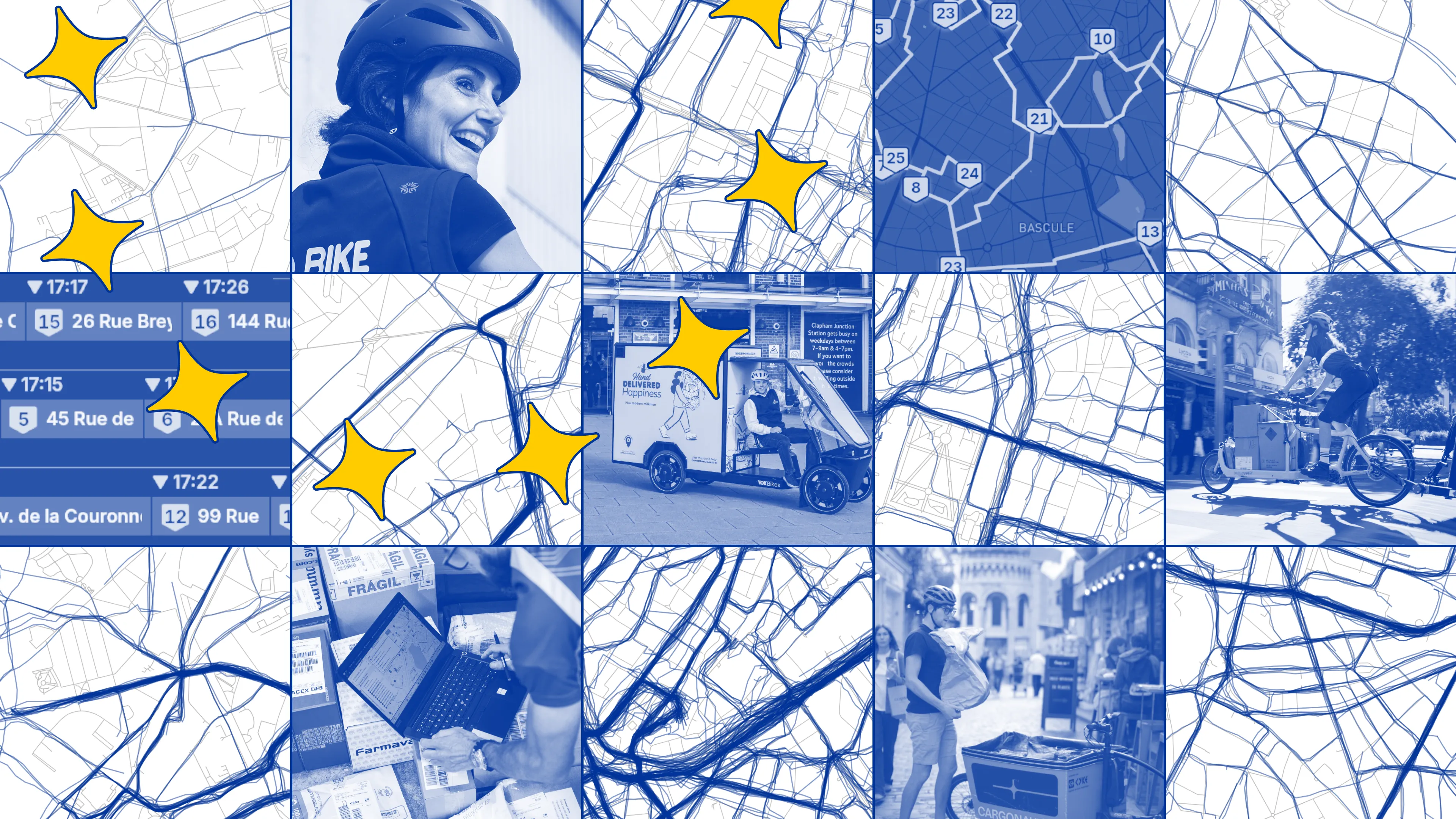

We’re excited to announce CARGOBIKE-SCALE, a €1.7M project funded by EIT Urban Mobility.
Over the past decade, cargo bike logistics operators have proven that an urban delivery model that is both more efficient and genuinely sustainable is possible. It’s taken incredible dedication and courage from a small number of people to build out this new ecosystem. This includes vehicle manufacturers, maintenance networks, federations, specialised software, training programmes, operational expertise and more.
And the results speak for themselves. Cargo bikes are faster than vans in congested cities, significantly cheaper to buy and run, and near-zero emissions. The bottleneck was never the vehicle.
Meanwhile, cities are running out of time. E-commerce is accelerating, delivery vehicles are multiplying, and electric vans – while cleaner – don’t fix congestion, road danger, or the inefficient use of urban space. The model that works is already here. It just can’t scale fast enough.
Each operator has built deep operational expertise in their own city. What’s missing are shared tools that codify this knowledge – making it possible to deploy proven models across Europe and manage the complexity that comes with scale.
CARGOBIKE-SCALE tackles this challenge. Kale AI is the lead partner of this consortium, and will be working together with three pioneering cargo bike logistics operators in Belgium, France and Spain – Urbike, Cargonautes, and Bikelogic – and two academic research labs at ITU Copenhagen and the University of Westminster. Over the next two years, we’ll co-develop and deploy the intelligence infrastructure that lets proven operational models scale across Europe.
The partners

Urbike operates one of Belgium's largest cargo bike delivery fleets in Brussels. Beyond their own operations, they've become central to Belgium's sustainable logistics ecosystem – supporting 500+ companies in their transition to cargo bikes, developing the CICLE training programme, and helping build the Belgian Cycle Logistics Federation.
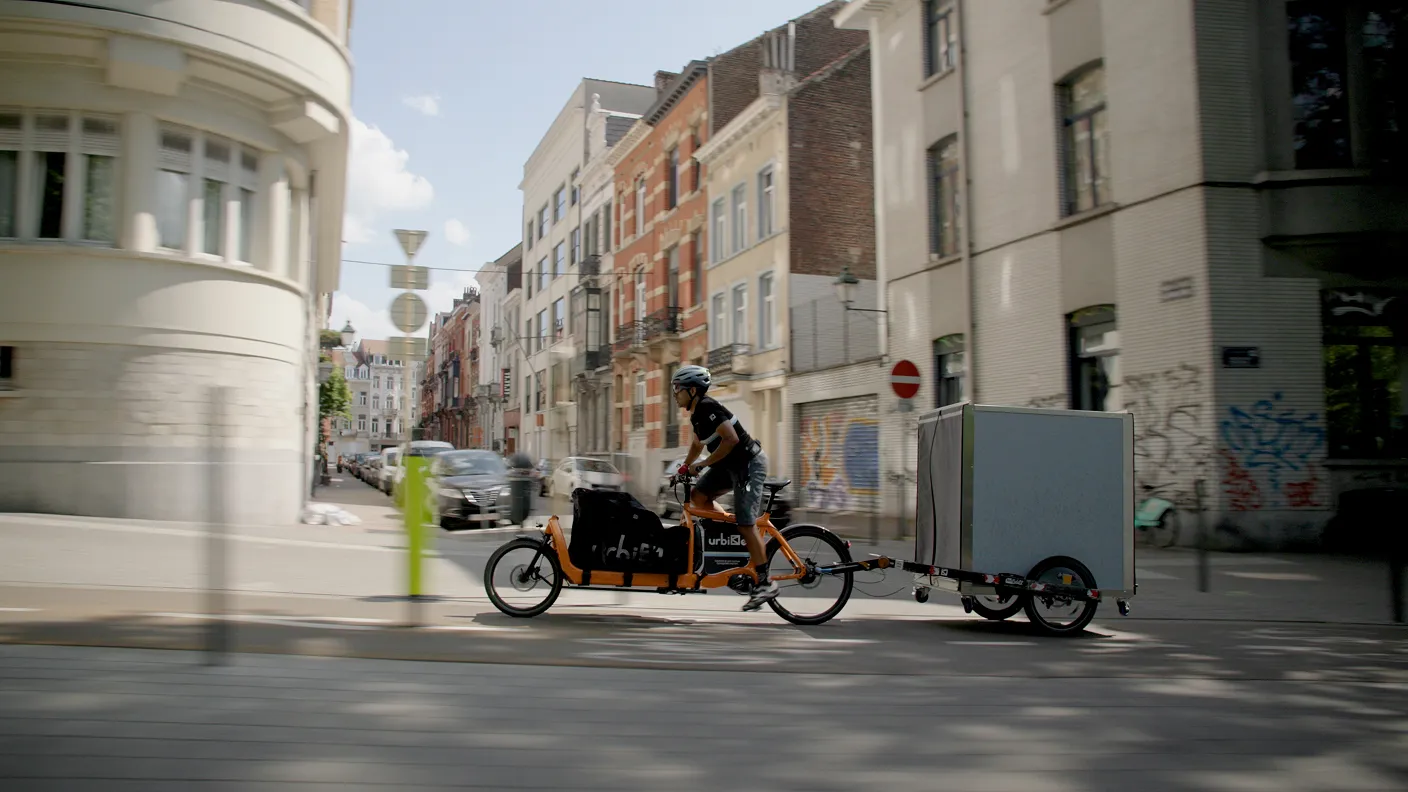
Urbike cargo bike rider making deliveries in the centre of Brussels.

Cargonautes operates one of France's largest cargo bike fleets across Paris, with 40 trained employees handling complex logistics operations. Beyond their own operations, they've become central to France's cargo bike ecosystem as co-founders of Boîtes à Vélo and leaders in the French Cycle Logistics Federation, providing consulting to hundreds of companies launching cargo bike services. They advise the French Transport Ministry on regulatory frameworks. During the Paris Olympics, they advised the RATP on implementing full-scale sustainable logistics operations – one of the world's largest demonstrations of cargo bike logistics at event scale.
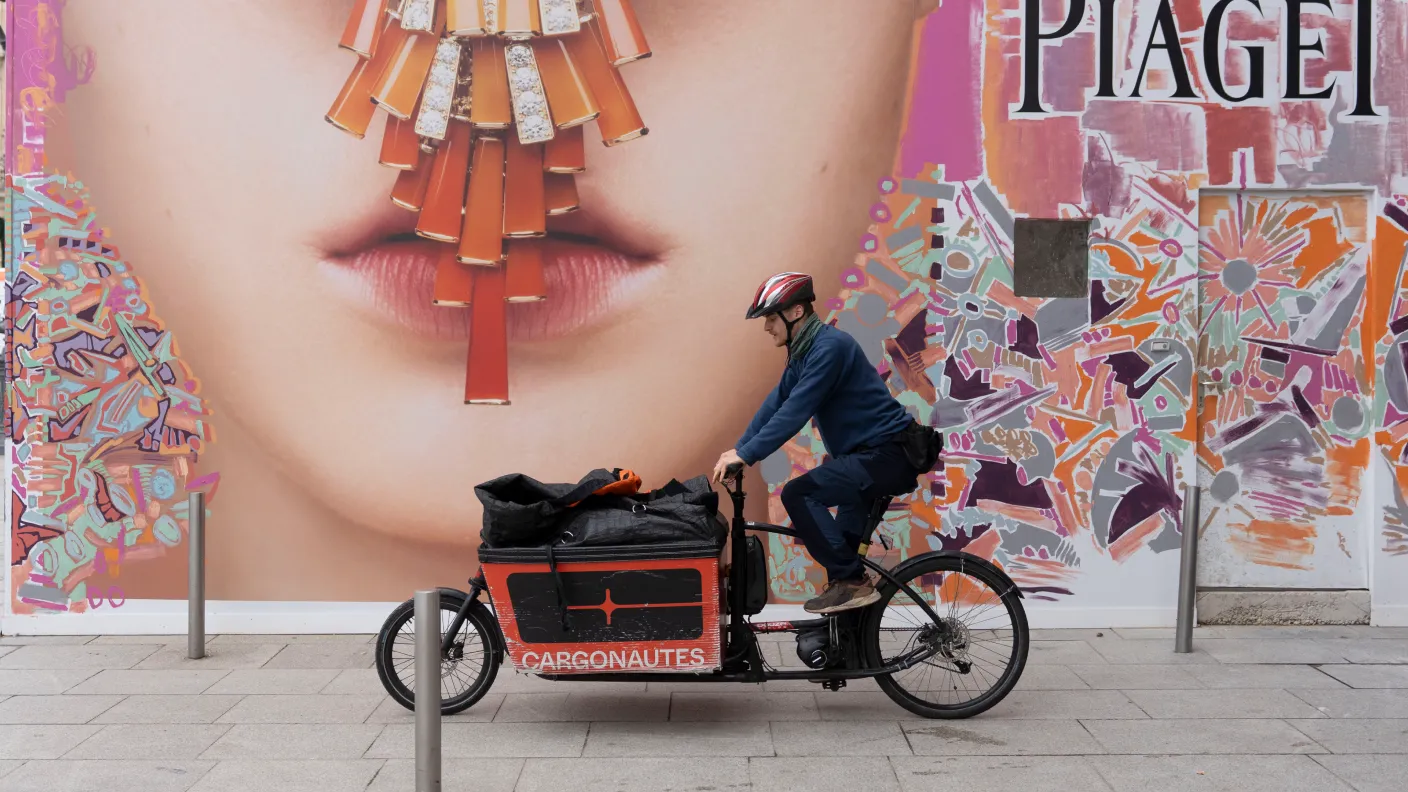
Cargonautes cargo bike rider making deliveries in Paris.

Cyke is a software platform built specifically for the operational realities of cargo bike logistics. Developed by the Cargonautes team, it now serves over 40 operators across Europe, providing the specialised tools that cargo bike operations need to run efficiently.

Dispatcher using Cyke to manage delivery operations.

Bikelogic represents the new generation of cargo bike logistics. Founded in 2022 as a cooperative in Sant Cugat, they deliver for both enterprise carriers like DHL and Nacex alongside local businesses. They combine operational experience with technical knowledge of cargo bike systems. They participate in the CICLE training programme alongside Urbike. Barcelona's supportive regulatory environment makes them an ideal testing ground for the SME-focused intelligence tools developed in this project.
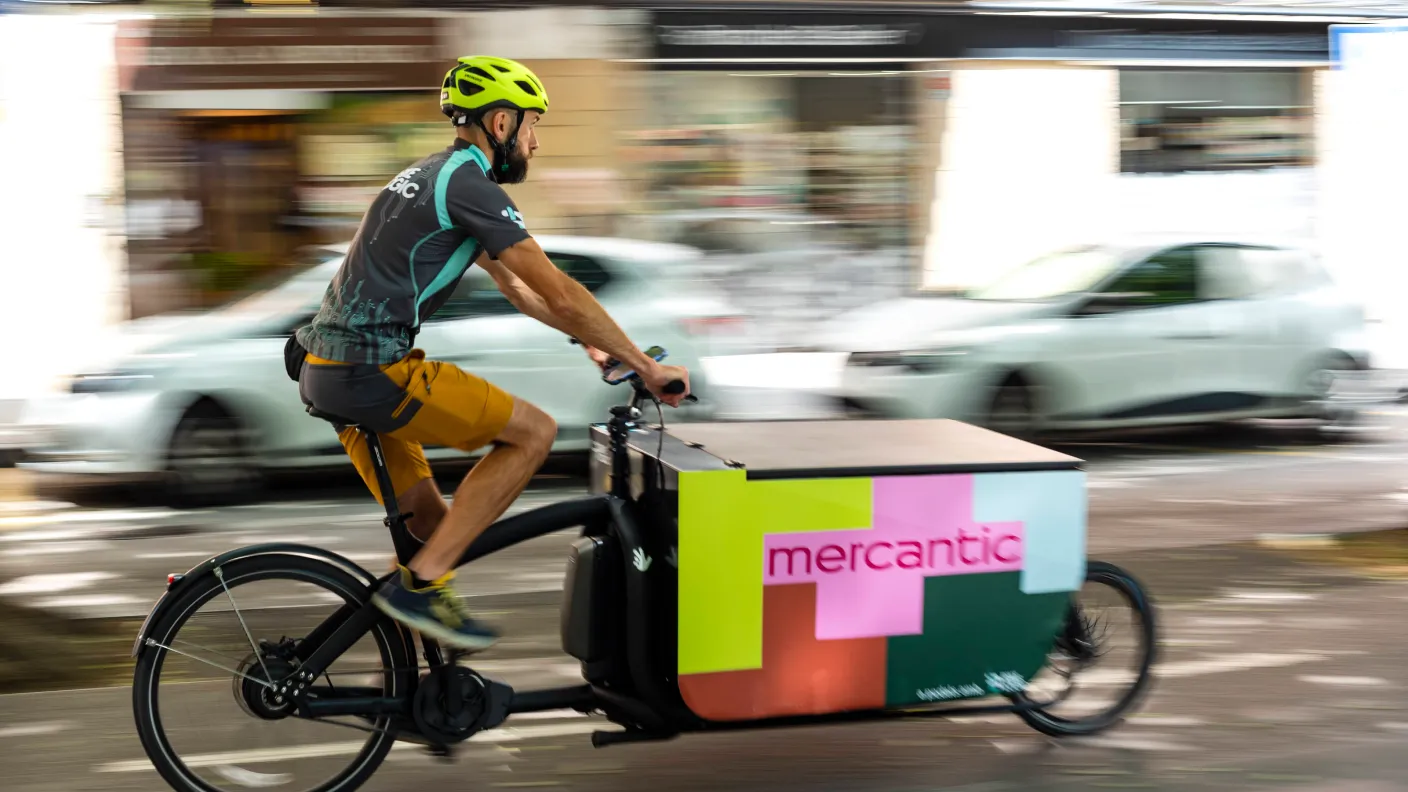
Bikelogic cargo bike rider making deliveries in Sant Cugat.

Dr. Maria Astefanoaei (IT University of Copenhagen), assistant professor in the data systems group, specialises in algorithms for spatial data with applications in urban computing and spatiotemporal interactions. She is part of ITU's Center for Climate IT. Her work appears at top-tier conferences including NeurIPS, SIGSPATIAL, and CIKM. She previously collaborated with Kale AI on a Climate Change AI-funded project studying service time and delivery efficiency across vehicle types, research that directly informs the technical foundations of CARGOBIKE-SCALE.

The Active Travel Academy at the University of Westminster is a world-leading research centre on active travel and cargo bike logistics. Dr. Ersilia Verlinghieri, Reader in Transport Research, specialises in transport governance with emphasis on social and environmental justice in low-carbon mobility transitions. She has published over 30 academic articles in leading peer-reviewed journals, with recent research focusing on working conditions in the cargo bike sector. She currently leads a large NIHR-funded project evaluating social and health impacts of cycling infrastructure in the UK. In CARGOBIKE-SCALE, Westminster leads impact assessment and policy framework development.

Kale AI coordinates the project and leads development of technical products and intelligence systems. The team combines research backgrounds in AI, cognitive science, and human-computer interaction with deep operational knowledge from years working alongside cargo bike operators across Europe. Their research on vehicle performance and urban logistics has been cited by transport ministers and the OECD. Recently selected as one of the top 10 UK AI and Climate innovators, they specialise in building systems that codify and scale operational expertise.
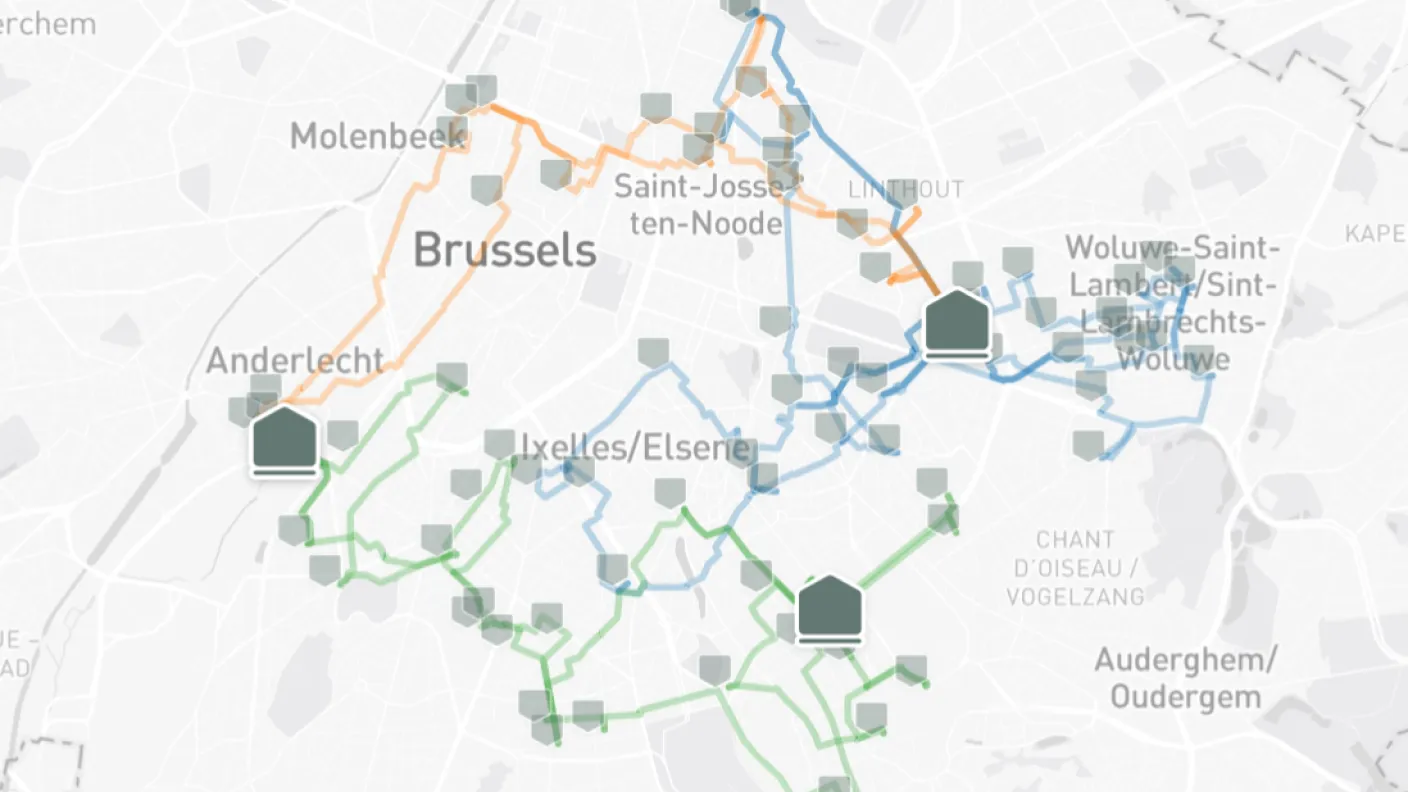
Kale AI’s software enables the scaling of cargo bike operations with route optimisation, micro-hubs, simulation, and more.
What we’re building
The work falls into three areas, each targeting a different bottleneck to scale.

Intelligence for dispatchers
Cargo bike logistics dispatchers solve remarkably complex planning problems daily – coordinating mixed fleets, managing micro-hub networks, adapting to dynamic conditions. Mathematical optimization can find remarkably efficient solutions – but only for the problem it’s given. The challenge is translation: capturing real-world logistics in mathematical language without losing what matters. This grows harder with cargo bikes and LEVs – vehicles reloading at micro-hubs throughout the day, serving diverse customer segments, operating under constraints traditional models weren’t built to represent.
We’re building AI infrastructure that helps dispatchers apply their expertise at scale: tools that let them express their constraints, capture what they know, and extend their capabilities to larger and more complex operations. This means doing the hard work of bridging the latest AI innovation – including Large Language Model technology – to critical industries that interface with the physical world.

Fleet transition technology
Transitioning from vans to cargo bikes isn’t a like-for-like replacement. It requires rethinking hub networks, route structures, and operational processes. But beyond operational complexity, fleet transitions can feel like a leap of faith into the unknown. There’s very little public data about the operational benefits of light electric vehicles. Deciding where to deploy them in a city, how to locate micro-hubs, how many vehicles to start with – these decisions involve trade-offs that feel too risky without data-driven models to inform them.
We’re building simulation and decision-support tools that help operators navigate this transition systematically: scenario planning that makes the economics transparent, models grounded in real operational data, and methodologies that reduce the uncertainty of making the switch. We’re also systematizing the processes and services needed to assist operators on the ground as they navigate these transitions. The goal is to move beyond the era of tentative pilots and extensive evaluation phases happening all across Europe. With the right data and models, we can accelerate this at scale.
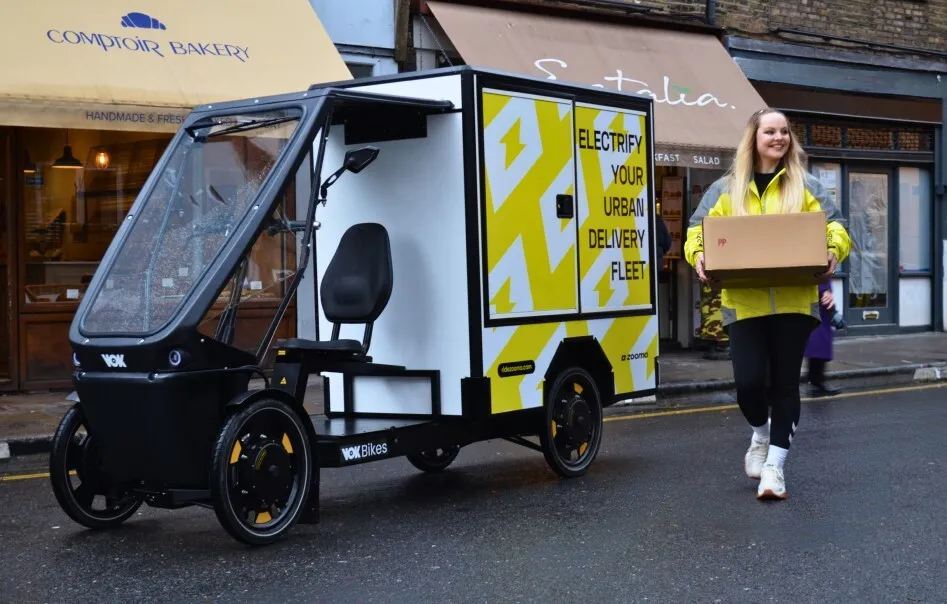
An electric cargo bike making deliveries in London.

Scaling tools for smaller operators
The capabilities that enable successful large-scale deployment – business intelligence, growth simulation, strategic planning – have historically been accessible only to the largest players. We’re building an SME intelligence platform that democratizes these tools, giving smaller operators the foundation to grow.
Two research streams support these tools:
- AI research: Connecting operations research to real-world urban logistics datasets. ITU Copenhagen leads work on spatial models and performance prediction, bridging academic methods with operational reality.
- Policy frameworks: To accelerate the transition. Westminster’s Active Travel Academy leads impact assessment and policy co-production, ensuring the sector’s growth is supported by evidence and governance structures.
Looking ahead
Pilots begin across three cities this year. The work ahead is collaborative: operators contributing operational knowledge, researchers providing rigorous methods, technology translating between them. The goal is infrastructure that outlasts the project – tools that become part of how the sector operates.
The pioneers of cargo bike logistics have proven the model works. Now we build the systems to scale it.